

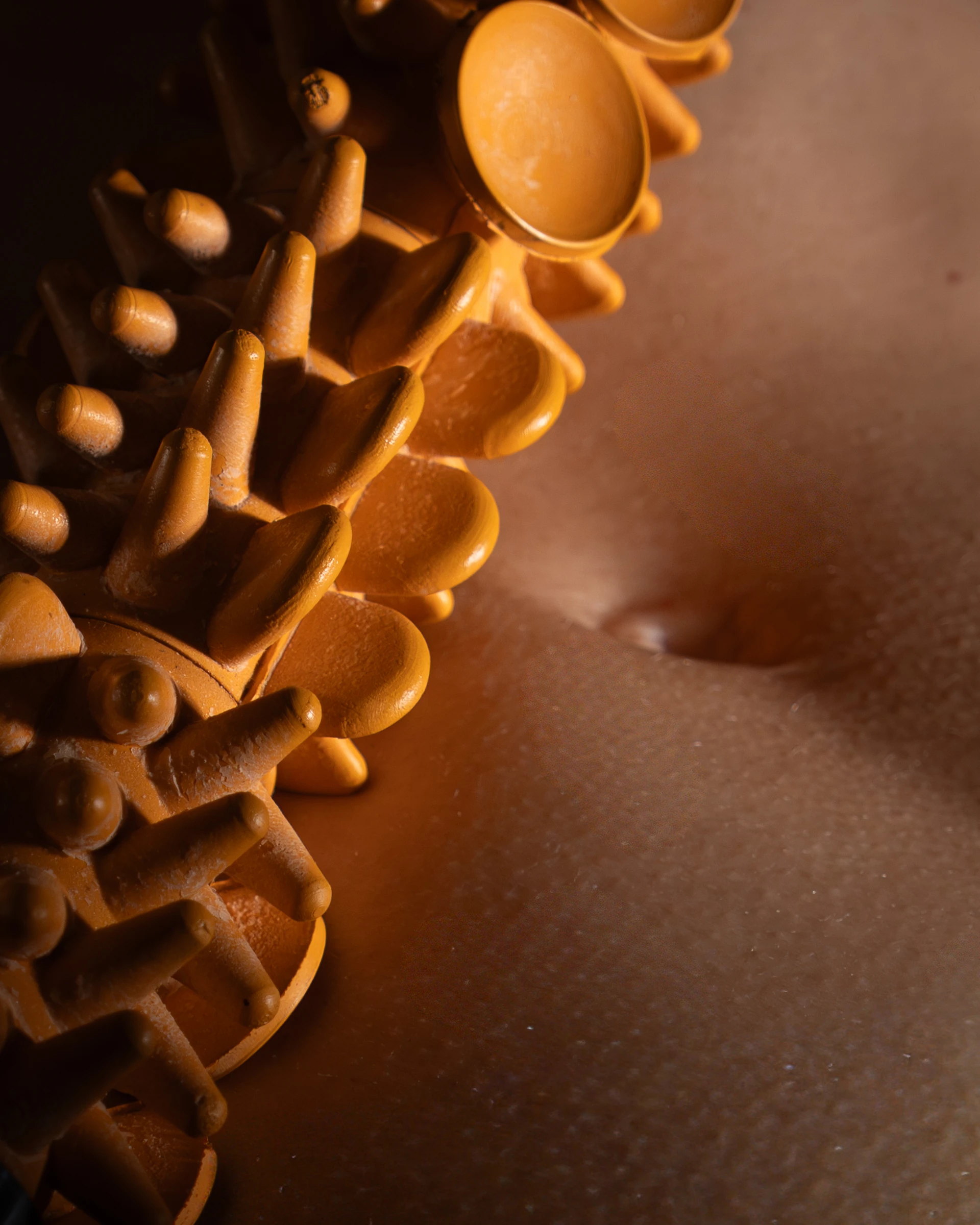
Maderotherapy sounds as though the material itself is the treatment: shaped wooden rollers, cups, and sculpting tools are moved over the body, often as part of a body-contouring service. But the useful question is not whether wood has a special effect on fat. It is what mechanical input the tool changes, how the practitioner controls it, and what claims are actually supported by evidence.
In Mexico City, the same word can describe very different sessions. One studio may use only wooden tools. Another may combine hands, rollers, vacuum devices, heat, or other technologies. That makes the label a poor substitute for understanding the method.
If you are comparing body-contouring categories more broadly, begin with our body contouring guide for Mexico City. This article stays focused on wooden tools and the evidence problem around them.
In short: a wooden tool changes contact area, leverage, pressure distribution, direction, and rhythm. Those factors can change the experience of massage and how superficial tissue is mobilized. What wood does not do by itself is prove fat destruction, toxin removal, permanent cellulite elimination, or guaranteed inch loss. The technique matters more than the material.
Start with the right distinction
The tool
A roller, curved board, cup, or other shaped implement changes how the practitioner contacts the body. A broader surface can distribute force differently from fingertips; a narrow edge can concentrate it; a roller can make repeated strokes easier to reproduce.
The technique
The result of that contact depends on pressure, direction, speed, number of passes, sequence, area, lubrication, practitioner judgment, and sensitivity. The same tool can be used gently or aggressively. Calling both sessions “maderotherapy” does not make them equivalent.
The claim
“This tool lets us apply repeated mechanical pressure” describes what happens. “This tool breaks fat cells” is a biological claim. The second requires evidence that cannot be supplied by the shape or popularity of the tool.
Wooden tools can change the mechanics of contact
Manual tools can make it easier to work across a larger area, alternate broad and focused pressure, repeat a movement consistently, and change the direction in which superficial tissue is mobilized.
Those are legitimate reasons to use a tool. They do not need a dramatic story about “crushing” fat to be meaningful.
A useful way to think about maderotherapy is as tool-assisted bodywork. The wooden implement changes how a force is delivered; the practitioner still decides whether that force is appropriate, how much is enough, and when to change course.
Three mechanical techniques are not interchangeable
One of the easiest mistakes in this category is to find research on any form of rolling or mechanical massage and treat it as proof for wooden maderotherapy. That is not how evidence transfers.
Manual wooden maderotherapy
Direct high-quality clinical evidence for the specific aesthetic protocols commonly sold as manual wooden maderotherapy is limited. Different tools and practitioner-defined sequences also make the category difficult to standardize.
Endermologie
A 2025 literature review in Applied Sciences examined endermologie, a device-based technique that combines suction with motorized rollers or flaps. The review included 24 articles across medical, rehabilitation, and aesthetic contexts and described substantial variation in devices, parameters, and indications.
That research can help us understand that controlled mechanical stimulation is biologically relevant. It cannot be used as a shortcut to say that a hand-held wooden roller produces the same effects. Endermologie has negative pressure, motorized components, adjustable device settings, and defined treatment heads that a piece of wood does not.
Foam rolling
A 2022 systematic review and meta-analysis in Sports Medicine found that longer-term foam-rolling interventions could improve joint range of motion in young healthy participants, with responses varying by muscle and joint.
Again, that tells us something useful about mechanical rolling. It does not demonstrate fat loss, cellulite removal, lymphatic “detox,” or the effectiveness of a wooden aesthetic protocol. Different question, different population, different outcome.
Separate plausibility from proof
When you hear a benefit attached to maderotherapy, ask where it sits on this ladder:
- Mechanically plausible: a tool changes pressure, contact, rhythm, or superficial tissue movement.
- Supported in another modality: a foam roller or mechanized vacuum-and-roller device has shown a specific effect in a particular study.
- Demonstrated for manual wooden maderotherapy: the same outcome has been studied with comparable wooden tools, protocol, population, and endpoint.
Moving from step one or two to step three without direct evidence is an inference, not a demonstrated result. A professional provider should be able to live with that distinction.
This evidence discipline also matters when a studio recommends repeated appointments. Our guide to how many body-contouring sessions you may need explains how to use a baseline and review checkpoints without buying into a magic number.
Cellulite is not simply “fat trapped under the skin”
Its visible dimpling reflects the relationship among skin, connective tissue bands, and underlying fat. It is extremely common, including in people who are lean or physically active.
The American Academy of Dermatology notes that results from endermologie studies vary and, when improvement is seen, it can be temporary. That matters even before we address the evidence gap between endermologie and a manual wooden roller.
A more defensible maderotherapy goal is to work on the appearance and feel of superficial tissue as part of a body-care routine, with variable results. “Permanent cellulite elimination” is a much stronger claim and should not be treated as the default expectation.
Bruising is not a progress marker
Wooden tools can deliver firm pressure quickly, especially over small contact areas. That makes pressure control central to quality.
A bruise is bleeding under the skin after small blood vessels are injured. It can happen more easily in some people, but it is not evidence that fat was broken, that circulation was “activated correctly,” or that the session worked better.
The National Center for Complementary and Integrative Health describes massage as generally low risk when performed appropriately, while noting rare reports of serious adverse events, some involving vigorous techniques or people at higher risk.
Firm is not the same as uncontrolled. Pressure should be adjustable by body area and by what you feel in real time.
Your feedback should change the technique
You should be able to say that an area is too sensitive and see the practitioner respond: reduce pressure, change the tool, alter the direction, spend less time there, or skip the area. If the only answer is “it has to hurt to work,” the technique is being defended with a slogan rather than adapted to your body.
Sharp pain, significant nausea, numbness, severe tenderness, or extensive bruising are not goals to pursue. If you use anticoagulant medication, have a bleeding disorder, a relevant vascular condition, recent surgery, an injury, active skin lesions, or another health issue that may change massage safety, disclose it before a firm session and seek medical guidance when appropriate.
Reusable tools need a specific cleaning protocol
A wooden roller passes repeatedly across skin and may also contact massage products. Before booking, it is reasonable to ask how reusable tools are cleaned between clients and what the studio does when skin is irritated, wounded, or infected.
The exact cleaning method depends on the tool’s surface, manufacturer instructions, and the products being used, so a responsible studio should have a specific protocol rather than a vague answer such as “we wipe them down.” The same applies to linens, hands, treatment surfaces, and any accessories used in the session.
How to tell whether the practitioner actually has a method
A good maderotherapy session should make sense even if you stop looking at the roller. Ask how the practitioner decides which tool to use, how pressure changes by area, what determines movement direction, and what she does when your feedback changes.
Look for five signs:
- the session begins with a goal and relevant health context rather than immediately choosing the most aggressive tool;
- pressure can be modified continuously;
- the practitioner can explain why a tool is being used in that moment;
- the technique does not depend on creating bruises or pain;
- results are described in proportion to what manual bodywork can reasonably do.
Ask for evidence before you pay for the promise
- “The roller breaks or destroys fat cells.” Ask for direct evidence for that tool and protocol.
- “Wood pulls toxins out of the body.” Ask which substance is being removed, by what physiological route, and how that was measured.
- “More pain means more reduction.” Pain is not a validated dose marker.
- “Bruising proves circulation is improving.” Bruising is tissue injury, not an efficacy test.
- “It works like non-surgical liposuction.” Manual pressure does not reproduce surgical fat removal.
- “A fixed package guarantees centimeters.” Package size is a commercial structure, not a universal biological prescription.
What maderotherapy means inside the Torrescano Method
At Savia, Masajes Reductivos de las Torrescano, rollers are tools inside the Torrescano Method, a family bodywork technique whose origins date to 1958. Sessions today are performed by physiotherapists trained in the method.
The Torrescano Massage combines manual work and rollers in a sequence whose pressure and priority areas can be adapted to the person. Savia does not present the wood itself as the source of a medical effect, nor does it sell rollers as a way to destroy fat or guarantee weight loss.
The meaningful difference is not that the roller is made of wood. It is how the practitioner uses contact, pressure, direction, rhythm, sequence, and feedback within a coherent method.
To compare this approach with the broader body-contouring category, review our services or visit our Roma Norte location.
For a more specific look at this technique by body area, see our guide to maderotherapy on the abdomen and what results are realistic.