

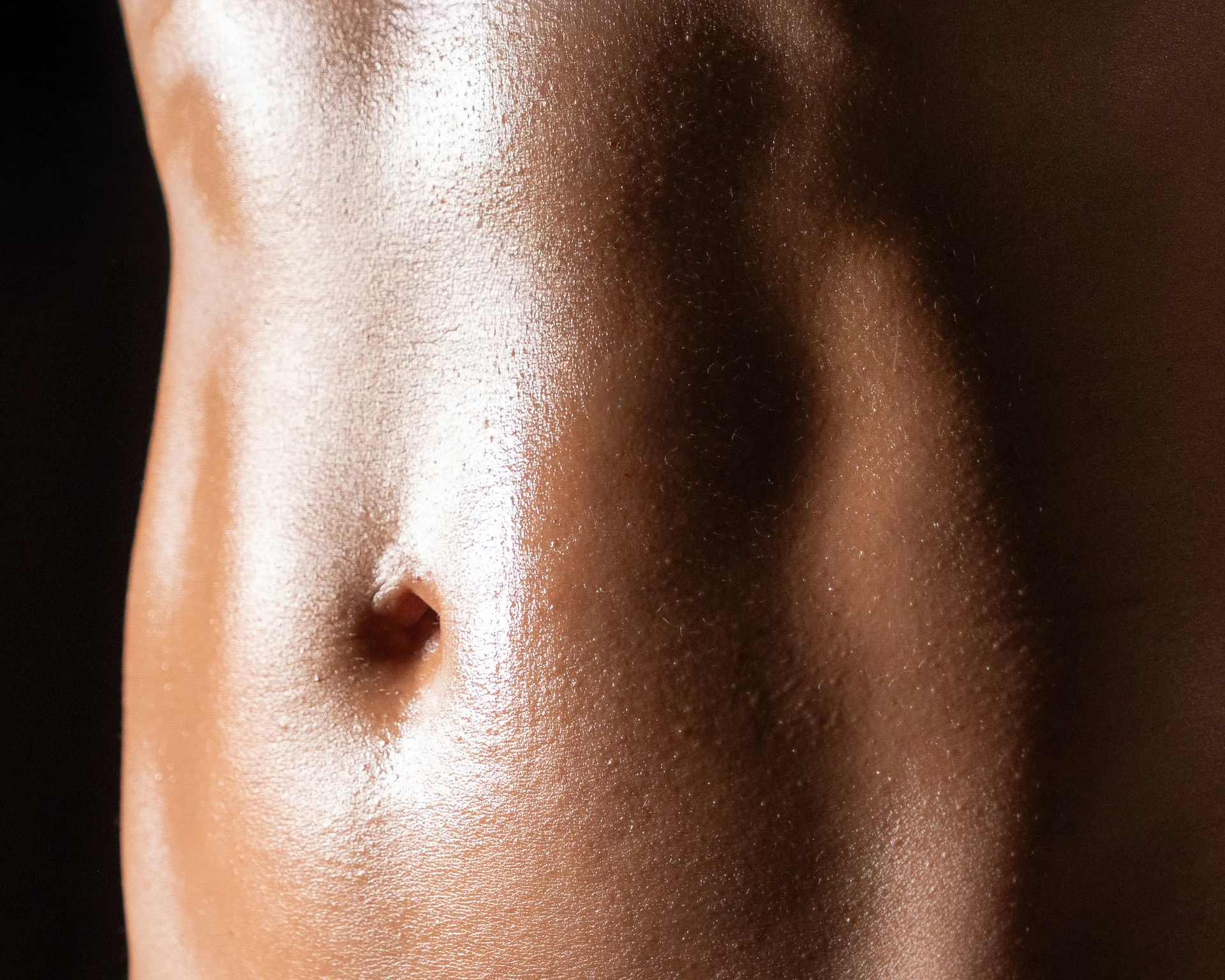
The abdomen is one of the easiest body areas to misread. It can look flatter in the morning and fuller at night without any meaningful change in body fat. A meal, constipation, gas, menstrual-cycle changes, breathing pattern, posture, muscle bracing, recent exercise, and ordinary fluid shifts can all change how the midsection looks and feels.
That is why manual abdominal contouring should not begin with “how many inches can I lose?” It should begin with a more basic question: what are you actually noticing?
If the concern is mainly aesthetic and the goal is a non-invasive body-care session, manual work can make sense. If the concern is persistent distension, significant pain, a new mass, repeated digestive symptoms, or unexplained swelling, a massage table is not the place to diagnose the cause.
Manual abdominal contouring works on the body from the outside. It can mobilize superficial tissue, vary pressure around the waist and abdomen, and be part of a wellness or appearance-focused routine. It does not remove subcutaneous fat, treat digestive bloating, reposition internal organs, or prove permanent waist reduction after one session.
“My stomach looks bigger” is not one diagnosis
Subcutaneous fat
This is adipose tissue stored beneath the skin. It contributes to body contour, but massage does not extract or permanently destroy it the way a surgical fat-removal procedure does.
Digestive bloating
Bloating is commonly described as fullness, pressure, or visible distension. It may change after eating, with gas, constipation, or a digestive condition. That is a gastrointestinal question, not automatically a “fluid retention” problem.
Temporary fluid changes
Some people notice puffiness or heaviness at particular times, but appearance alone cannot tell you whether a change is ordinary variation, edema, or a lymphatic problem.
Posture + breathing
Pelvic position, rib-cage position, abdominal bracing, and whether you are inhaling or exhaling can change the silhouette immediately without changing fat or tissue volume.
The session works with skin and superficial soft tissue—not the cause of every abdominal change
During manual abdominal contouring, the practitioner may use hands, rollers, or other massage tools to vary pressure, direction, and contact across the abdomen, waist, and nearby areas. The session can feel active rather than relaxing, but it should still be adjustable.
That mechanical contact can change how superficial tissue feels during and after a session. Some people describe temporary lightness, warmth, relaxation, or a different sense of mobility in the area. These are valid experiences; they should not be converted into a claim that visceral fat, digestive gas, or internal organs were physically “moved into place.”
If your main objective is localized fat removal, see our comparison of body-contouring massage vs. liposuction. They are different categories because the mechanism is different.
A flatter-looking abdomen after massage is not proof of fat loss
The appearance of the waist can shift quickly because of posture, breathing, lighting, muscle tone, digestive contents, and temporary fluid distribution. Body fat does not disappear because the camera angle changed—or because a roller passed over the area.
Manual bodywork can still have an aesthetic role. The honest frame is narrower: working with superficial tissue, comfort, perceived texture, and the way the area feels within a body-care routine.
Use the right outcome
“My waist feels less tense and I like how the tissue looks after repeated sessions” is a reasonable personal observation. “The massage destroyed abdominal fat” is a biological claim that requires a completely different level of evidence.
Digestive distension should not be relabeled as lymphatic congestion
Mayo Clinic describes bloating as a sensation of pressure or fullness that can be accompanied by measurable abdominal distension. Gas, eating patterns, constipation, and digestive conditions can contribute. Symptoms that persist or interfere with daily life deserve medical evaluation rather than stronger massage.
The distinction matters because a person can feel “swollen” without having edema. If your abdomen repeatedly changes after meals, is associated with bowel changes, or comes with gastrointestinal pain, it is more useful to investigate the digestive pattern than to assume the tissue needs aggressive drainage.
Source: Mayo Clinic — gas and bloating.
The abdomen is especially easy to manipulate visually
A useful progress photo requires discipline. Otherwise the photo documents setup more than change.
What can change the image
Camera height, lens distance, hip position, rib position, abdominal contraction, inhalation vs. exhalation, lighting direction, clothing compression, and time since the last meal.
How to make it less misleading
Use the same location, light, camera distance, posture, time of day, and breathing instruction. Compare several checkpoints rather than one dramatic before/after pair.
Even with consistency, photography can document appearance. It does not tell you which tissue or physiological process produced the visual difference.
The abdomen is not a place to prove toughness
Firm bodywork should still be responsive. Pressure that causes sharp pain, nausea, guarding, dizziness, or significant distress should be reduced or stopped.
The National Center for Complementary and Integrative Health describes massage as generally low risk when performed appropriately, while noting rare serious adverse events and greater caution with vigorous techniques or higher-risk clients.
“It hurts because it is breaking fat” is not a credible quality standard.
A temporary change around your period does not require a different anatomy lesson
Many people notice changes in bloating, bowel habits, tenderness, or perceived puffiness around the menstrual cycle. That can affect how the abdomen looks and how much pressure feels comfortable.
The practical implication is not that a massage must “flush hormones.” It is that the practitioner should adapt pressure, positioning, and expectations to how you feel that day. If menstrual symptoms are severe, new, or disruptive, that belongs in a healthcare conversation.
Recent pregnancy or cesarean changes the decision
After birth, abdominal appearance can reflect healing, stretched skin, abdominal-wall changes, scar tissue, posture, fatigue, fluid shifts, and normal postpartum recovery. A cesarean adds a surgical incision and deeper healing.
There is no universal week when firm abdominal bodywork becomes appropriate for everyone. A recent scar, unresolved pain, heavy bleeding, fever, wound concerns, or specific medical restrictions take priority over aesthetic contouring. Our dedicated guide to postpartum body contouring goes deeper into those readiness questions.
Abdominal symptoms can cross out of spa territory
Mayo Clinic recommends prompt medical attention for severe abdominal pain and highlights warning signs such as fever, persistent vomiting, bloody stools, marked tenderness, or abdominal swelling. A new or significant distension should not be treated as a contouring problem by default.
Pause the massage plan
Recent abdominal surgery, a known or suspected hernia, a new palpable lump, acute injury, significant unexplained tenderness, or symptoms that are changing quickly.
Seek urgent care when appropriate
Severe pain, fever, persistent vomiting, bloody stool, a swollen and very tender abdomen, chest symptoms, or other signs your healthcare provider considers urgent.
Use a scorecard that does not depend on one tape measurement
- Was the goal clear before the session started?
- Could pressure be adjusted area by area?
- Did the practitioner distinguish an aesthetic goal from digestive or medical symptoms?
- Did you leave comfortable enough to return to ordinary activity?
- If you track appearance, are your photos or measurements reasonably standardized?
- After several sessions, is the perceived benefit meaningful enough to justify time and cost?
If you are deciding how often to repeat the experience, our guide to body-contouring session frequency gives a continue / space / pause / stop framework.
The most credible answer is sometimes “that is not something massage can determine”
A professional bodywork provider can discuss pressure, technique, superficial tissue, comfort, priorities, and realistic appearance goals. It should not diagnose why your abdomen is distended, promise to treat a gastrointestinal condition, claim to reposition organs, or guarantee fat loss.
If the provider cannot distinguish what it can work with from what it cannot diagnose, the problem is not the technique. It is the boundary of practice.
How Savia approaches abdominal contouring
Savia, Masajes Reductivos de las Torrescano works from the Torrescano Method, a family bodywork technique whose origins date to 1958. Sessions today are performed by physiotherapists trained in the method.
The abdomen and waist can be priority areas within the Torrescano Massage. Manual movements and rollers are used within a sequence, with pressure adapted to the person. Savia does not present abdominal bodywork as a way to remove fat, cure digestive bloating, or guarantee instant waist reduction.
See our services or our Roma Norte location if you want to understand how the session fits your actual goal before booking.